The eCommerce world is fast-paced, and efficiency is key. There are many things at play, from processing orders to shipping products and businesses rely on seamless operations to meet customer expectations.
For businesses regularly packing and shipping products, thermal labels can actually play a huge part in ensuring smooth logistics, accurate tracking and professional branding. In this blog, we'll take a look at what thermal lables are and how you can use them to increase the efficiency of your ecommerce operations.
What Are Thermal Labels?
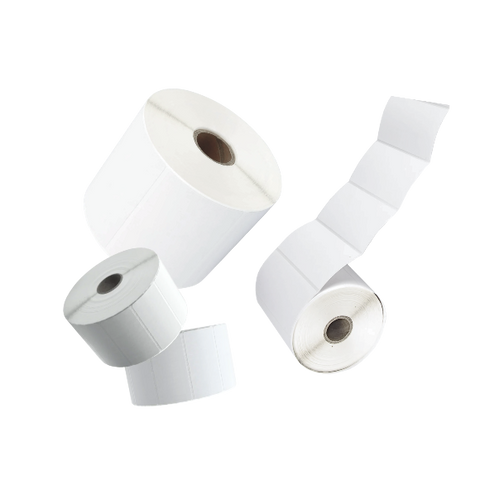
Thermal labels are adhesive labels that use heat-sensitive materials to produce an image or text without the need for ink or toner. They come in two types:
-
Direct Thermal Labels – These labels use a chemically treated surface that darkens when exposed to heat. They are ideal for short-term applications like shipping labels and receipts since they can fade over time when exposed to heat, light, or friction.
-
Thermal Transfer Labels – These labels require a thermal ribbon to transfer ink onto the label, making them more durable and suitable for long-term use, such as barcode labels and product labelling.
Benefits of Thermal Labels in E-Commerce
For many eCommerce businesses, thermal labels are the preferred choice over traditional ink-printed labels for a few different reasons:
-
Cost-Effective: They eliminate the need for ink and toner, reducing printing costs.
-
Fast Printing: Thermal printers produce labels quickly, increasing workflow efficiency.
-
Durable and Reliable: They provide long-lasting results, perfect for shipping.
-
High Print Quality: Produces sharp, scannable barcodes for accurate tracking.
-
Easy Integration: Compatible with major e-commerce platforms like Shopify, Amazon, and eBay.
Coloured Thermal Labels
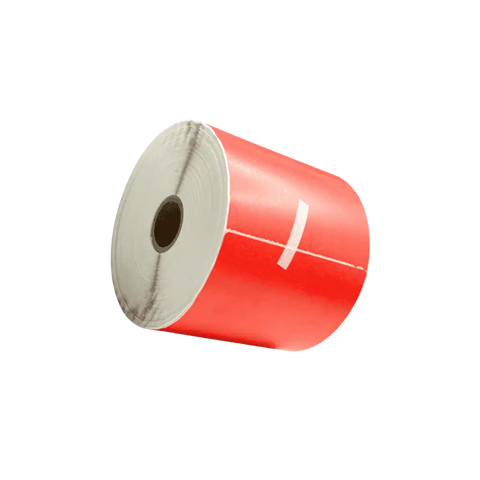
In addition to standard white thermal labels, businesses also use coloured thermal labels to improve organisation and branding. These labels come in a variety of colours, including red, blue, orange, and yellow, and offer several advantages:
-
Enhanced Organization: Different colours can be used to categorise shipments, products, or inventory.
-
Improved Visibility: Coloured labels stand out, making it easier to locate items quickly.
-
Stronger Branding: Businesses can match labels to their brand colours for a cohesive and professional appearance.
-
Efficient Workflow: Using specific colours for different processes helps reduce errors and streamline operations.
Most Popular Thermal Label Sizes in E-Commerce
Different e-commerce businesses require different label sizes depending on their shipping carrier, packaging, and product type. Below are the most commonly used thermal label sizes in the industry:
-
4” x 6” (102mm x 152mm)
- Direct Thermal Economy paper labels with a perforation between each label are for short term use.
- The standard shipping label size for major carriers like UPS, FedEx, and USPS.
-
Ideal for printing order details, tracking barcodes, and shipping information.
-
2” x 1” (50mm x 25mm)
-
3” x 2” (76mm x 50mm)
-
4” x 2” (101mm x 50mm)
Choosing the Right Thermal Label for Your Business
So, how do you know which thermal label is the best one for you? It comes down to a few key factors:
-
Purpose: Shipping, inventory, product labelling, or branding.
-
Durability Needs: Direct thermal for short-term use; thermal transfer for long-term applications.
-
Printer Compatibility: Ensure the label size matches your thermal printer model.
-
Carrier Requirements: Follow shipping carrier specifications to avoid delays and reprints.
Where To Buy Thermal Labels
If you're looking for high-quality, affordable thermal labels, look no further than SR Mailing. Explore the SR store to find the best fit for your needs and optimise your shipping process today!