At SR Mailing, we’ve been aware of the problem that plastics present for some time, and we’ve set our sights on becoming a zero-waste packaging company by 2025. That means eliminating plastic waste, recycling, and innovating to create new products including paper-padded envelopes and home-compostable, 100% recycled mailing bags.
Where we can’t make products that can be recycled or composted, we’re working with ClimatePartner to ensure that those items are carbon neutral.

The impact of single use plastics
Over the last few years, most of us worldwide have become more aware of the problems that single use plastics can cause for the planet, and the need for us all to act in a much more sustainable way. Many different environmental groups have been shouting about the need to reduce our use of plastics, and are pointing at the statistics – which tell the story of quite how huge the plastic problem has become.
- 50% of all the plastic that has ever been manufactured has been created in the past 15 years
- Plastics created in 1950 totalled 2.3 million tonnes. By 2015, we were creating 448 million tonnes – and production is expected to double by 2050
- The world is producing 381 million tonnes in plastic waste every year, which as production is set to double, so waste is expected to double by 2034
With statistics like these in mind, it is clear that collectively, humans need to take action to resolve the problem of plastic waste.
What types of plastics are a problem?
Almost all plastics are made from natural and organic materials including cellulose, coal, natural gas, salt, and crude oil. Although plastic is made from natural products, the process that needs to take place to create bags, wrapping and packing material is a drain on the environment. But the manufacturing methods isn’t the only issue.
The biggest problem is single use plastic. More than 40% of the plastic that is produced currently is single-use – and that means that it will be used just once before the plastic is put in the bin. That has a massive impact on the environment that is ongoing – for many centuries, in some cases. Here are some typical estimated decomposition rates for commonly used, single use items:
- Plastic bags: 20 years
- Plastic-lined coffee cups: 30 years
- Plastic straws: 200 years
- Plastic bottles: 450 years
- Toothbrushes: 500 years
- Styrofoam: 500 years
- Fishing line: 600 years
Not only that, there are some types of plastic that contain additives to strengthen them and help them last longer – but this means they can take much, much longer to break down. With this in mind, it is clear to see why we need to find a solution for plastic waste – and why it is so important for us to find reusable alternatives.
How can we dispose of plastics?
Where it is possible to do so, recycling plastics should be the solution – and although many big companies say that they are investing in the circular economy, unfortunately, many single use plastics end up being simply placed in the bin, because the recycling facilities simply aren’t prepared for processing them at present.
Aside from being terribly wasteful, because plastic isn’t biodegradable, when it has been collected by the local council waste collection services, it is either sent to landfill, or burnt at dedicated power stations to recover the energy. While either burying or burning plastic waste is an option, Greenpeace suggest that when we get to the point of deciding which is better, we’ve already failed.
Why is plastic pollution a problem?
No type of pollution is a good thing, let’s face it, and using up resources and discarding them simply isn’t good for the planet, even if the items being reused are biodegradable. But plastic pollution is a much bigger issue, since the strength and longevity of plastics means that if we can’t recycle or reuse it, it is simply suffocating the planet, with the seas suffering the most.
- Between 8 million and 14 million tonnes of plastic gets into the oceans every year
- 88% of the sea's surface is polluted by plastic waste
- The Great Pacific Garbage Patch is around 1.6 million square kilometres – which is an area bigger than the state of Texas
- Britain alone creates around 1.7 million tonnes of plastic waste every single year
- UK shores are not immune - there are 5000 pieces of plastic & 150 plastic bottles for each mile of our beaches
Microbeads are an issue for marine vegetation, while all types of marine pollution reduces the level of oxygen in the ocean that marine organisms require to flourish. Considering the amount of CO2 that marine vegetation can help to absorb, plastic waste is bad news for the whole planet.
How does plastic get into the ocean?
Many people wonder which countries produce the majority of plastics in the ocean. The truth is though, although there are some countries that create a greater percentage than others, every country worldwide contributes to the problem with plastics in the ocean. Tracing the countries that are the biggest polluters means that internationally, pressure can be placed on those countries to encourage them to make changes.
The primary way that waste – including plastic waste – gets into the ocean is through mismanagement at landfill sites and from being discarded on beaches and in rivers, where it gets washed into the tide. Just 10 river systems carry 90% of the plastic into the oceans – with eight of these rivers being across Asia:
- Yangtze (China)
- Yellow (China)
- Indus (China, India, Pakistan)
- Hai He (China)
- Ganges (India)
- Mekong (Vietnam, Laos, Thailand, Cambodia, China, Myanmar/Burma)
- Amur (Russia, China)
- Pearl (China, Vietnam)
- Nile (Egypt, Sudan, South Sudan, Ethiopia, Uganda, Congo, Kenya, Tanzania, Rwanda, Burundi)
- Niger (Benin, Guinea, Mali, Niger, Nigeria)
50% of plastic pollution originates from Asian countries, with China responsible for around 29% of plastic in the ocean, but approximately 66% of plastic pollution is simply litter. China is starting to tackle the plastic waste they are creating though – with bans on disposable tableware, straws, and plastic cotton buds just the start. You can read much more about how China is tackling the problem of plastic waste here.

Why does it matter if plastic ends up in the ocean?
It is estimated that there are now more than 5.25 trillion pieces of plastic in our oceans, with up to 46,000 pieces in every single square mile, and every day that figure increases, with 8 million more pieces joining them.
And it isn’t just a case of plastic taking up space as litter – plastic is getting into all kinds of fish and other marine animals, which then enters our food chain.
It can harm marine life
Untold millions of animals are killed by, injured, or made sick every year as a result of plastic pollution. Ecologists know of at least 700 species – including endangered species – that have been impacted by plastics in the ocean.
Plastic products have been eaten by almost every species of seabird, and fish, which doesn’t just cause injury to the individual animal, but for the long-term survival of their species.
Plastics are carried around the world
As plastics are broken down by the ocean into micro and nano sized fibres, they are found everywhere around the planet. Nowhere on the planet escapes – plastics have been found at the top of the world’s highest peak, Mount Everest (8,848.86 metres above sea level) and at the bottom of the deepest trough, the Mariana Trench (11,034 meters below sea level).
As plastic breaks down, it ends up in the food chain
You’re sure to have heard about microplastics – plastic that has been broken down into smaller pieces by the wind and the waves. These tiny pieces can be less than half a centimetre across. Scientists believe that every single baby sea turtle has plastic in their stomach – which is quite a horrifying thought.
Microplastics are a problem for humans because they can end up being eaten by fish and shellfish. That becomes a much bigger problem when those creatures are caught for us to eat, because they can cause problems such as blocking our digestive tracts, piercing our organs, and potentially causing premature death. Both animals and humans that have ingested plastics may find themselves not wanting to eat as their stomachs become overloaded with plastics, which can lead to premature death.
In addition to this, there has been worrying research that shows that microplastics are causing problems with reproductive systems, leading to fewer offspring, and since nanofibers are being consumed by juvenile fish, this is perpetuating the problems. As the cycle continues, unless we take drastic action, we’re going to see extinction on a massive level before very long.

What are big businesses doing about plastic waste?
Twenty companies are responsible for over half the single use plastic waste in the world, according to recent research. These companies, and what they say they are doing to tackle plastic waste are:
-
ExxonMobil contributes 5.9% of total single use plastic waste – although they are investing in advanced recycling and are researching safe, scalable and economically viable solutions for plastic waste.
-
Dow contributes 5.6% but are founder members of the Alliance to End Plastic Waste.
-
Sinopec contributes 5.3%, but were the first Chinese company to join the Alliance to End Plastic Waste, and are investing heavily in researching biodegradable materials.
-
Indorama Ventures contributes 4.6%, but has been actively working towards creating a world where plastic never becomes waste.
-
Saudi Aramco contributes 4.3% of plastic waste, although they are looking at uses for waste plastics including use in road building.
-
PetroChina contributes 4%. Their 2019 report suggests they are moving towards reducing oily plastic cloth, but we were unable to find other references to plastic waste from them.
-
LyondellBasell contributes 3.9% but have committed to producing 2 million metric tons of recycled and renewable-based polymers annually, and diverting plastic waste through Alliance to End Plastic Waste projects.
-
Reliance Industries contributes 3.1%, but says it is partnering with brands to undertake recycling of waste plastic packaging into high-quality eco-friendly materials.
-
Braskem contributes 3%, and has a recycling initiative.
-
Alpek SA de CV contributes 2.3% and is investing in enhanced recycling solutions, and circular economy solutions.
-
Borealis contributes 2.2% but is investing in circular economy, with the Borcycle
-
Lotte Chemical contributes 2.1%. They announced ‘Project Loop’ in 2020, to minimise environmental impact.
-
Ineos contributes 2% but have collaborated with Plastic Energy to turn plastic waste into basic molecules and create new products.
-
Total contributes 1.9%, but is also a founder member of the Alliance to End Plastic Waste.
-
Jiangsu Hailun Petrochemical contributes 1.6%. We were unable to find any information about their plastic waste reduction initiatives at the time of writing.
-
Far Eastern New Century contributes 1.6%, despite announcing their commitment to sustainable development of products as far back as 2016.
-
Formosa Plastics Corporation contributes 1.6%, but is another founder member of the Alliance to End Plastic Waste. The latest progress report, from 2020 is here.
-
China Energy Investment Group contributes 1.5%. We were unable to find information about their plastic waste reduction initiatives at the time of writing.
-
PTT contributes 1.5%, but is investing heavily in the circular economy, with initiatives for sustainable development.
-
China Resources contributes 1.3% - but we were unable to find information about their plastic waste reduction initiatives at the time of writing.
Environmental organisations and influencers have been raising awareness of the issue of plastic waste in recent years, which means that businesses are being forced to make changes. That’s a great thing though, and although there is still a long way to go, there are some really impressive changes being made across many industries – here are some of the most impressive ones from the UK.
Supermarkets
Grocery retailers in the UK are getting involved in reducing their use of plastic – more than 120 companies, including food and drink brands have signed up to the UK Plastics Pact, which was launched in 2018. This aims to help hit targets by 2025 including:
- Finding alternatives to single use packaging
- Ensuring 100% of plastic packaging is reusable, recyclable or compostable
- Helping to ensure that 70% of plastic packaging is recycled or composted
- That there should be a 30% average recycled content in all plastic packaging
Currently though, Which? found that only 52% of packaging products from supermarkets are easy to recycle. In addition, there are inconsistencies which cause problems:
- Supermarkets have different ways of labelling packaging for recycling
- Some packaging doesn’t have any recycling information on it at all
- Some packaging is incorrectly labelled – Tetra Pak is sometimes mislabelled as paper
- Some packaging labels is only visible when the product is opened – so those who want to make a choice in the aisle may find it difficult to make better choices
From the Which? Research, Morrisons was found to be the best in terms of easy recycling by weight, although weight isn’t the only measure of sustainability, since some packaging is harder to recycle and heavier recyclable materials can change the data.
Despite the issues that still need to be tackled, there is good news coming regularly from UK supermarkets. Some promising recent headlines from supermarkets include:
- As of June 2021 Waitrose and Aldi have begun using recycled plastics that would have made it into the ocean for use in their fruit, vegetable, and ready meal ranges. For Waitrose, this brings their use of virgin plastics down further – they’re committed to using a minimum of 30% recycled content in all plastic packaging. This meets the UK government’s tax on businesses that use less than 30% recycled plastic in packaging from April 2022.
The travel industry
The travel industry had become notorious for their reliance single use plastics – from cutlery and utensils to miniature toiletries in bathrooms, soaps in plastic wrapping and so on. They might have been originally used to create more convenience for their passengers and visitors, but the amount of plastic waste that was generated as a result was catastrophic.
Over the past few years, companies are becoming much more aware of their impact on the environment and the need to reduce the use of plastic – and there continues to be good news announcements.
- British Airways announced that they would remove 700 tonnes of single use plastic from flights in 2020. Although COVID-19 would have delayed much of this, with the majority of flights grounded, the airline is switching to more sustainable alternatives, including bamboo utensils, using paper wrapping for bedding and blankets, and removing plastic bags.
- Network Rail has implemented free water fountains in train stations, helping to avoid millions of plastic bottles being sent to landfill. Their research had shown 36% of people who normally carry a reusable water bottle would buy a plastic bottle at a train station – so this is a huge win for the planet.
What steps can small businesses take to reduce plastic pollution?
Where it is possible to do so, retail businesses should switch to recycled, and easily recyclable packaging materials, such as those made from paper and cardboard.
There are some items that simply can’t be packaged easily without plastics. Where this is the case, switching to recycled packaging materials is a better option, and opting for those that can be collected by local council recycling, or in supermarket recycling schemes.
Businesses should consider their employees, and to influence them to be more sustainable at work. It makes sense to encourage staff to follow guidance like minimising plastic bag use, banning plastic straws and cutlery, and providing coffee in jars or cafetieres, rather than single-use coffee pods. Providing kitchen items like plates and utensils makes it easier for staff to bring their own lunches, while having a water fountain with a filter installed means that staff can use their reusable bottles. Switch out liquid soaps in bathrooms to refillable versions that come in recyclable containers too.
Think about your office consumables too – when you’re buying paper, ensure it is wrapped in recyclable wrapping, and when you’re buying pens, see if refillable ones are an option, or if not, find a pen recycling facility such as the one that Ryman offers.
Where can recycled packaging be bought?
At SR Mailing, we’ve made it our mission to create a zero-waste packaging solution, from raw materials through to disposal and recycling. While there is still an environmental impact when creating recycled plastic packaging, it is a much smaller impact than continuing to use virgin materials. More than 95% of our products are now eco-friendly, and we’re working to get that figure to as close to 100% as we can.
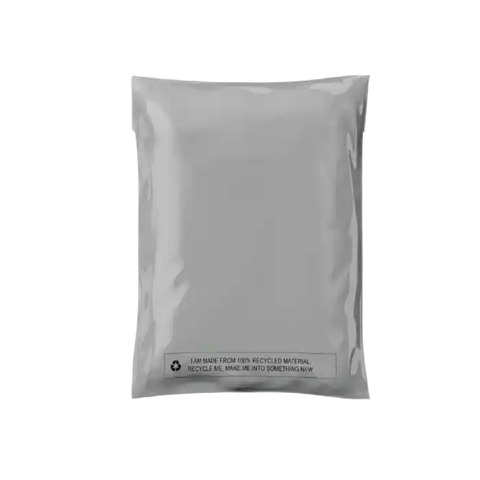
Our range includes recycled plastic mailing solutions, from 100% recycled and 100% recyclable mail bags, to clear bags that are made from partly recycled plastics.
We also offer honeycomb paper roll, which can be used in place of plastic bubble wrap to cushion products during transit. Since the honeycomb paper roll’s unique design interlocks, this reduces the need for plastic tape. We think it looks much more luxurious providing a high-end unboxing experience, at a price that is cost efficient. The best bit is that it is biodegradable – and there is no additional plastic making it into the ocean.
What can individuals do about plastic pollution?
Becoming conscious of the issues that plastic is causing our planet means that many of us are looking to make changes to our lifestyles to prevent further damage. Tiny steps are the way forward – and so these are some of our top tips to help you.
1. Avoid single-use plastics
Remembering to bring your reusable bags for shopping, reusable straws, and cutlery for lunches out, and travel mugs to coffee shops are all habits to get into, so you don’t have to use disposable plastic versions. Not only it is better for the planet, but you’ll look far cuter with your own reusable versions! Having several reusable mugs means you can co-ordinate your coffee mug to your outfit – very chic.
2. Bring your water bottle
Through the 90s and early 2000s, having a single-use water bottle became something of a status symbol in many parts of the world – with premium water brands attempting to make single use sexy, which was terrible. Thankfully, today having a great reusable bottle – either a stainless steel one, toughened glass or BPA-free plastic – is a better solution. There are more places than ever that provide water on tap, and if you’re unsure of the quality of the water when you’re on the go, you can get bottles with filters built in.
3. Avoid microbeads
The UK government banned microbeads in cosmetic items like toothpaste and exfoliating scrubs in 2018, but if you’re travelling worldwide, you may still encounter this type of product. If you need this type of product, look for natural ingredients such as oatmeal or salt.
4. Consider your takeaway food and drink
Now, we would never say that you should stop having takeaways – but where you can, try and choose restaurants that use cardboard, or aluminium containers. If you do find you accidentally end up with plastic containers, try and reuse them as much as possible – such as for sandwiches or leftovers, before recycling them. Talking of sandwiches, when you can, bring your own sandwiches from home, rather than buying sandwiches in plastic boxes or wrappers when you’re on the go. You’ll benefit the environment, your pocket and possibly your waistline, as well as reducing your use of plastic.
When you’re buying drinks – whether they are beer, cider or lemonade – if you’re buying single use containers, opt for aluminium cans or glass bottles that can be recycled.
When you are buying packs of cans in multiples, avoid packs that are held together with plastic six pack rings – cans are more often available in cardboard alternatives, or in boxes today. Many drinks companies are avoiding six pack rings today, but should you encounter any, ensure that they have been cut from before they are placed in the bin, so that animals who get inadvertently caught up in them don’t get strangled. Some types of six pack rings are able to be recycled, but if your local council doesn’t accept them you may be able to send them to specialist recycling services.
5. Buy consciously
Retailers will continue to do what results in the biggest profits, so one of the biggest ways you can influence them to reduce their reliance on plastic and to move to sustainable alternatives is to vote with your money. That means that whatever you’re buying, from groceries to clothes, look for the brands that mean you can avoid plastic.
In many cases, buying consciously is better for your bank balance too – such as buying concentrated versions (like with laundry detergent), or buying in bulk (with toilet paper, for example). In some cases, you may find that you can buy lightly used items, minimising the need for new items altogether.
6. Vote with your money
One of the best ways to influence brands to do better is to be careful about where you spend. By choosing businesses that have sustainable options, you’ll be able to lower your personal plastic use, and businesses that continue to use plastic will see a downturn in sales, which will encourage them to make changes.
7. Use your social media to influence
Social media is a double-edged sword – but in the case of influencing companies to do better with their use of plastic, it can be a great weapon. While social media teams aren’t personally responsible for decisions that the company makes about packaging (so be nice if they engage with you!) their management teams often listen to comments on social media, so if you’re using social media anyway, it is worth providing that feedback.
8. Find alternatives to cleaning products in plastic bottles
When it comes to household cleaning, there are so many options that come in plastic bottles – and while many companies are working on making their bottles recyclable, often those with trigger sprays have parts that can’t be separated. That means there’s still waste. Companies like smol are developing ranges that are concentrated, and can be shipped to you without the water – so once you’ve got a starter kit, you just receive the concentrates through the post and add the water at home. This doesn’t just reduce your use of plastic; it also means the effects of transport are lower.
9. Find personal hygiene alternatives
In terms of hygiene products, there are better alternatives to plastic bottles emerging too. Shampoo bars and soaps are quickly becoming as effective as liquid versions in plastics, while items like razors can be found made from stainless steel, with used blades being added to a special tin, so that the whole lot can be recycled together.
Feminine hygiene products have come a long way in terms of sustainability too. Where sanitary towels were once made up of plastics, or bleached cottons (which were not good for the environment in so many ways, but also not ideal for intimate health) there are now a great number of alternatives, from reusable menstrual cups to period underwear that doesn’t need pads, and washable, reusable cloth sanitary towels.
10. Recycle
It is a pretty obvious thing to say, and many of us add our plastics to our household recycling collections. But there are some plastics that can’t be recycled this way, so check with your local authority, and find alternative solutions for recycling those that can’t be taken by your council, such as in supermarkets.
What about where plastic is essential though?
There are some situations where single use plastics are essential – such as for medical use, for certain food and so on. Ideally, we’d be able to eliminate these, but for hygiene reasons, it may not be possible. Where it is possible, recycled, and recyclable plastics should be used, with strategies carefully implemented to ensure those plastics don’t end up in landfill or in the ocean.
However, scientists, and major corporations are developing alternatives to fossil fuel-based plastics, with some exciting innovations:
- Plastics that can biodegrade easier, meaning that they can be absorbed back into the earth more quickly
- Plant-based plastics that use easily grown crops such as corn or sugarcane – which means they can break down quickly
- Plastics that combine plant-based ingredients with traditional fossil fuels to lessen the environmental impact
There are also developments in the way that fossil fuel plastics can be broken down. In 2018, scientists discovered an enzyme that can break down plastics, and are working on this solution to develop it further. While it won’t be as easy as simply spraying the ocean with this type of bacteria, it may provide a longer term solution that is a better option than burning or burying discarded plastics.

Our final thoughts
As you know, we’re on a mission here at SR Mailing to help improve the amount of virgin plastics that are used for packaging. With sophisticated recycling techniques now available, there isn’t any reason for us to be using virgin ingredients – and by us feeding used plastics back into new plastics, we can reduce the impact on the environment where an alternative to plastic isn’t yet available.
As we’ve said before, it doesn’t take one or two people being eco-friendly and recycling perfectly – we need billions of people reducing, reusing, recycling, and making better choices every day. We may not be able to undo the damage that has already been done, but as we all take these steps together, we can work on making the situation better for future generations.
The main point we’d like people to implement? Stop choosing single use plastics where it is possible. Finding alternatives and making conscious choices will help us to save the planet.
Ready to stop using single use packaging? Browse our eco-friendly alternatives such as mailing bags and cardboard boxes.



5 comments
It’s heartening to see businesses like SR Mailing taking proactive steps toward combating plastic pollution. The statistics you’ve shared are indeed staggering, underscoring the urgent need for global action. As a skip hire expert, I appreciate your efforts to spread awareness about this critical issue.
recycling is a powerful tool in the fight against plastic pollution, but it’s also crucial for individuals and industries to reduce their plastic usage. Your initiative to become a zero waste packaging company by 2025 is commendable and sets a remarkable example for others to follow.
Very good blog, I will recycle from now~
I agree with you, very good work. Thanks for sharing.
We may not be able to undo the damage that has already been done, but as we all takes these steps together, we can work on making the situation better for future generations.
your blog on reading is so full of great insights, i love what your guys work, not only offer eco friendly packaging product but share your knowledge of industry and common issue whole humanity facing.
Superb Work, keep on writing !